PDF Download Lectures On Quantum Mechanics (Lecture Notes and Supplements in Physics)
Now, what do you consider the arising publications this time? A lot of publications are presented and published by lots of publishers, from numerous countries in this globe. Yet, have you to be extra selective to select among the very best. If you are confused on just how you pick the book, you can extract from the subject to use, the writer, and also the reference.
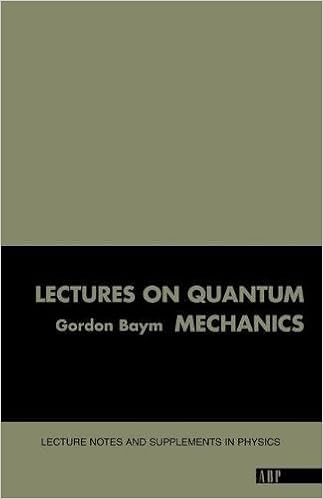
Lectures On Quantum Mechanics (Lecture Notes and Supplements in Physics)

PDF Download Lectures On Quantum Mechanics (Lecture Notes and Supplements in Physics)
Do not make you really feel hard when searching for publication that you will certainly review to save your time. Publication is constantly prominent in every time, every period, and also every age. All individuals will certainly need publication as referral to do something. When you have no concepts concerning just what to do in this leisure time, get Lectures On Quantum Mechanics (Lecture Notes And Supplements In Physics) as one of the reference books that we provide! Giving special publications are so enjoyable for us. It is so easy to offer generosity for everybody.
The factor of why you could obtain as well as get this Lectures On Quantum Mechanics (Lecture Notes And Supplements In Physics) sooner is that this is guide in soft documents kind. You could check out guides Lectures On Quantum Mechanics (Lecture Notes And Supplements In Physics) wherever you want also you remain in the bus, workplace, home, as well as various other places. However, you might not need to relocate or bring the book Lectures On Quantum Mechanics (Lecture Notes And Supplements In Physics) print wherever you go. So, you will not have heavier bag to carry. This is why your choice to make much better concept of reading Lectures On Quantum Mechanics (Lecture Notes And Supplements In Physics) is actually useful from this instance.
This is not about just how much this book Lectures On Quantum Mechanics (Lecture Notes And Supplements In Physics) costs; it is not likewise about just what type of publication you truly enjoy to review. It has to do with exactly what you could take and receive from reading this Lectures On Quantum Mechanics (Lecture Notes And Supplements In Physics) You can favor to pick other book; but, it matters not if you try to make this publication Lectures On Quantum Mechanics (Lecture Notes And Supplements In Physics) as your reading choice. You will not regret it. This soft data book Lectures On Quantum Mechanics (Lecture Notes And Supplements In Physics) can be your great pal regardless.
When you are thinking that this publication is additionally proper for you, you have to set the moment when you intend to start reading. In making the principle of the analysis book, this publication can be starter point to lead you enjoying a publication, not only to show yet likewise to read. Currently, aim to recognize it and also allow your friends and family understand about this book and also site. You can educate to them that this website actually offers billion titles of books to check out. So, collect and obtain the features.
From the Back Cover
These lecture notes compromise a three-semester graduate course in quantum mechanics given at the University of Illinois. There are a number of texts which present the basic topics very well; but since a fair quantity of the material discussed in my course was not available to the students in elementary quantum mechanics books, I was asked to prepare written notes.
Read more
About the Author
Gordon Baym has remained at Illinois since his arrival; a frequent visitor to Nordita and the Niels Bohr Institute in Copenhagen, he has also been a visiting professor at the Universities in Tokyo, Kyoto and Nagorya. His principal research interests have been in the physics of condensed matter in systems ranging from liquid helium to neutron stars and high energy nuclear collisions. He is also the author of Lectures in Quantum Mechanics. Leo P. Kadanoff left Urbana for Brown University in 1969 and thereafter joined the faculty of the University of Chicago in 1978, where he is presently the John D. and Catherine T. MacArthur Distinguished Service Professor of Physics. After his early research in Green's functions, he returned to study of critical phenomena near phase transitions, and then toward models of urban growth; his research is now aimed at turbulence and chaos in many-particle systems. For his work is critical phenomena, he received the Buckley prize of the American Physical Society, the Wolf Foundation award, and the Elliot Cresson medal of the Franklin Institute.
Read more
Product details
Paperback: 608 pages
Publisher: The Benjamin / Cummings Publishing Company; 1 edition (January 22, 1969)
Language: English
ISBN-10: 0805306676
ISBN-13: 978-0805306675
Product Dimensions:
5.5 x 1.4 x 8.5 inches
Shipping Weight: 1.9 pounds (View shipping rates and policies)
Average Customer Review:
2.7 out of 5 stars
15 customer reviews
Amazon Best Sellers Rank:
#1,017,700 in Books (See Top 100 in Books)
I am extremely unhappy with the version of this text that I have received. The version that I received has many missing characters and faded information within the text. For example sometimes I cannot tell if a letter is bolded (since it is a vector) or regular font (for scalars) in equation where the nature of the variable isn't obvious. Friends of mine have received the same textbook, but have not had this problem. On page 117, a plus sign turned into a muliplication sign because of the lack of decent print quality. I do not think that you should buy this textbook from this seller given the incredibly poor print quality. I paid for a new version of a graduate textbook to avoid this issue, not run head first into it. See pictures for examples!
Old is gold. There are some very useful material here such as scattering theory and perturbative techniques etc.
The font is unreadable! Buy other versions. Also, the index is worthless.
Perhaps I'm biased towards treatments like Sakurai, but this book was way too dedicated to basic wave mechanics and belabored wave treatment instead of more technical and formal treatments.
Bad quality printing. I have the original textbook since 1978 and bought this one to replace it. Although be a very nice quantum mechanics textbook for PhD students, the quality printing of this edition is very bad!
i bought it because my professor chose it as our textbookit is a good book anyway
This book grew out of Gordon Baym's Quantum Mechanics lectures at the University of Illinois at Urbana-Champaign in the late 1960's. As such, it is really more suitable as a companion text rather than as a primary text. That said, I found that Baym provides a degree of physical intuition that is not found in the standard texts. I especially like Baym's discussion of creation and annihilation operators as well as Fermi's Golden Rule. Baym also provides a good treatment of the Klein Gordon and Dirac equations, the relativistic analogues of the Schrodinger equation for Bosons and Fermions. In general, Baym seems to have the intention of supplying the reader with the necessary preparation for the study of quantum field theory--an approach understandable in light of the fact that Julian Schwinger (one of the pioneers of quantum field theory and co-winner of the 1965 Noble Prize and physics for quantum electrodynamics along with Feynman and Tomonaga) was Baym's Ph.D. adviser.Emblematic of this book is its discussion of the topic "Angular Momentum and The Harmonic Oscillator" (pp.380-386) within Chapter 17 which covers "Rotations and Tensor Operators." Based on a 1952 Atomic Energy Commission (What the Department of Energy used to be called) report by Julian Schwinger, angular momentum is modeled as two harmonic oscillators, each corresponding to its own creation and annihilation operator which moves the value of each oscillator up or down by a spin 1/2 "quantum". The total number of spin quanta shared by the two oscillators is seen to correspond to the angular momentum quantum number j. The difference between the number of spin quanta in each oscillator then corresponds to the quantum number m. Of course there are various commutation relations between the operators and before you know it, you have a clever way of calculating rotation matrix elements. There is even an amusing post-script that a scheme involving three harmonic oscillators corresponding to "quarks" can be used to generate the SU(3) symmetries of strongly interacting particles. Back when Baym first penned this textbook he observed that "It is an open question whether the quarks are real particle or not".
Come on, it's not that bad. It has an interesting way of taking your natural understandinig of polarized light as 2 orthogonal states to try to give you some insight into that as a quantum mechanical system and then generalizing that understanding to other QM systems. Baym learned his advanced quantum mechanics at Harvard, where they would use his book as the closest text to what they were teaching for a number of years (at least when taught by his instructor). It was a reasonable text, used at Illinois and Harvard, which had good physics departments.
Lectures On Quantum Mechanics (Lecture Notes and Supplements in Physics) PDF
Lectures On Quantum Mechanics (Lecture Notes and Supplements in Physics) EPub
Lectures On Quantum Mechanics (Lecture Notes and Supplements in Physics) Doc
Lectures On Quantum Mechanics (Lecture Notes and Supplements in Physics) iBooks
Lectures On Quantum Mechanics (Lecture Notes and Supplements in Physics) rtf
Lectures On Quantum Mechanics (Lecture Notes and Supplements in Physics) Mobipocket
Lectures On Quantum Mechanics (Lecture Notes and Supplements in Physics) Kindle
 Follow My Tweets
 Subscribe via RSS
 Subscribe via Email
0 comments:
Post a Comment